

Owner-Builder ADU in California: What You Save and What You Risk
A typical 800-square-foot ADU in California costs somewhere between $150,000 and $300,000. A general contractor’s fee usually runs 15% to 25% of that. At 20%, that’s $30,000 to $60,000.
It’s easy to picture keeping that money. And you can legally try. California lets you pull your own permit and act as your own contractor, as long as you follow some strict rules. Plenty of homeowners look at that math and start wondering whether to be your own contractor.
The harder question is whether those savings hold up over four to six months of an active job site. We’re a design-build company, so you can guess where we stand. We’ll still give you an honest picture. A DIY ADU can work, and for the right person it saves real money. For many others, it turns into a second full-time job, with legal risk attached.
What the Owner-Builder Exemption Actually Is
The rules come from California Business and Professions Code Section 7044. It lets a property owner build or improve their own property without a general contractor license California would otherwise require, as long as certain conditions are met.
The first condition is about who lives there. The work has to be on property you live in or plan to live in. You can’t use an owner builder permit to build something and flip it. If you sell within a year of finishing, the state presumes you built it to sell, and that can bring fines. The law also limits how often you can use the exemption for structures you later sell.
The second condition is about who does the work. You have two options:
- Do the work yourself, or have people you hire as your employees do it and pay wages.
- Hire licensed contractors directly for each trade.
You can’t pay an unlicensed handyman as a “contractor” for a job over $1,000 (that limit went up from $500 in 2025). Pouring a foundation, framing, or running electrical wiring for an ADU is far past that line.
At the permit counter, you sign an owner-builder declaration. It says you’re acting as the general contractor, you don’t hold a license, and you accept the responsibilities that come with the role. That means following the building code and Title 24 energy rules and being accountable for the structure’s safety. Most people sign it in about thirty seconds.
You Become the Employer
This part catches most owners off guard. If you hire workers directly, you’re legally their employer. That’s true whether they’re your cousin’s friend or a crew you found online.
Being an employer in California comes with real duties. Labor Code Section 3700 requires workers’ compensation coverage, and even a small policy can cost well over $1,000 to start. You’re also responsible for payroll taxes, federal and state withholding, unemployment insurance, and Social Security contributions. Cal/OSHA safety rules apply to your job site the same way they apply to a big builder’s.
Now picture a worker falling off the roof. If you don’t have workers’ comp, the medical bills, rehab, and lost wages can come straight out of your pocket. Serious injuries cost hundreds of thousands of dollars. One accident can wipe out every dollar you meant to save. That’s why owner-builder liability insurance matters so much on a job like this.
Even if you only hire licensed subcontractors, you still have work to do. Check every license on the CSLB website. Ask for a current workers’ comp certificate before anyone sets foot on your lot. If a sub lets their coverage lapse halfway through the job, that risk can land on you.
Insurance and Financing
Two problems usually show up before the first shovel goes in the ground.
- The first is insurance. Most homeowner policies don’t cover major construction. You’ll need a builder’s risk policy for fire, theft, and vandalism during the build. Insurers see owner-builder construction as riskier, and they price it that way. Expect a builder’s risk policy to cost roughly 1% to 4% of the project value, and expect many questions during underwriting. Getting owner-builder insurance in place can take weeks.
- The second problem is money. Many lenders won’t make owner-builder construction loans California homeowners ask for at all. In a bank’s worst case, a half-built ADU goes unfinished, and an inexperienced builder makes that more likely in their eyes.
Lenders that do say yes set tough owner-builder loan requirements. Common ones:
- A large cash reserve, often 20% to 30% of the budget, sitting in the bank before closing
- A strict draw schedule, where you pay for materials and labor first, and the lender reimburses you after an inspection
- Detailed budgets, schedules, and subcontractor bids up front
That draw structure means you need a lot of cash on hand. Most owner-builders end up paying out of savings or a home equity line of credit. If you’d rather use standard financing, our ADU financing options work with licensed builders, which lenders are much more comfortable with.
Where the Savings Actually Go
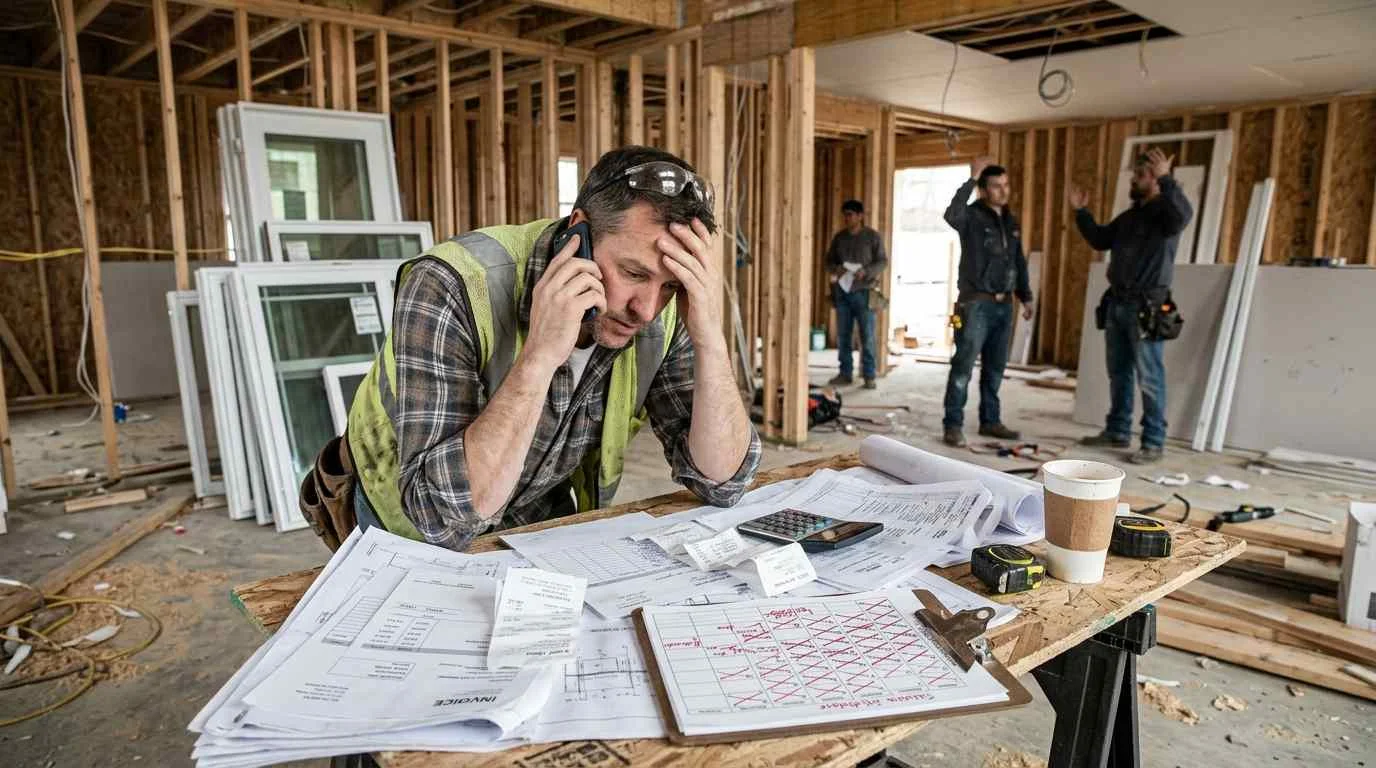
A contractor’s fee pays for real work, and when you are your own contractor, that work moves to your desk. It includes:
Scheduling every trade in the right order. The underground plumbing has to be inspected before the slab is poured. Drywall can’t go up until the rough electrical passes. Collecting bids and comparing them. Running the permit and inspection calendar. Ordering materials early enough, since custom windows can take eight weeks. Settling arguments between trades, like when the electrician and the HVAC installer both want the same ceiling space. And carrying the cost of every mistake.
The savings start leaking right here. Many subcontractors quote homeowners noticeably higher than they quote a general contractor who sends them work every month. They know a one-time job usually means more phone calls, more changes, and more waiting. You’ll also pay retail for lumber, fixtures, and supplies, since you don’t have a trade account.
Gaps in the schedule cost money too. Your drywall crew gets held up on another job, and your project sits for three weeks. Every extra week adds loan interest. Mistakes get paid for twice: once for the wrong door, once for the right one.
Then there’s your time. People asking what the benefits of being an owner-builder are usually point to the $40,000 they’d save. Spread that over 800 hours of calls, site visits, and supply runs, and you’re paying yourself about $50 an hour. You’re also taking on all the risk for that rate.
When It Works and the Middle Path
A DIY ADU can make sense. It tends to work for:
- People already in the trades, such as a licensed electrician, plumber, or someone who has run builds before
- Simple projects, like a basic garage conversion on a flat lot, which is much safer than new construction on a slope with retaining walls
- Owners with a flexible timeline, no loan interest running, and no urgent need for rental income
- Someone with good local subcontractor contacts and the patience to chase people every day
For everyone else, there are options between doing it all yourself and handing everything over.
One popular route is to hire a contractor for the shell: foundation, framing, roofing, and rough electrical and plumbing. Then you take over the interior finishes yourself, such as painting, flooring, trim, and cabinets. You save on the parts where mistakes are cheaper, and the structural work is done right.
Another option is a construction manager, who charges a flat fee to run the project without the full markup. You can also pull an owner-builder permit and pay a professional to inspect key stages, like the foundation and framing, before the city inspector arrives.
Think about resale, too. When you sell, California’s disclosure rules mean buyers will learn who built the ADU and whether it was permitted. Owner-built work often gets more questions during escrow and from appraisers. A unit built by a licensed contractor tends to hold its value more easily.
Count the Full Cost Before Deciding
Before you decide, run the numbers both ways. Get a real bid from a licensed builder. Then build your own estimate and include everything: builder’s risk insurance, higher loan costs, higher subcontractor prices, and a likely delay of two or three months. Put a value on your own time at your normal hourly rate. Compare the two final numbers. Once you count everything, the savings from owner-builder work are often much smaller than they looked at first.
Many people want an ADU for the rental income or the space for family. Few of them want to spend six months on the phone with subcontractors and take on the legal risk that comes with it.
That’s the trade we take off your plate. At IMKAT Homes, one team handles design, engineering, permits, and construction, so you never have to stand at a city counter.
Still weighing a DIY ADU against hiring a builder? Book a free feasibility consultation. We’ll look at your property, give you a clear price, and help you compare it honestly with doing it yourself. Call (916) 915-0313 or contact us online.


